What Is Volatility in Slots?
Volatility describes how often a slot tends to pay and how big those wins usually are. High-volatility games pay rarely but can deliver huge prizes, while low-volatility games pay more frequently with smaller rewards.
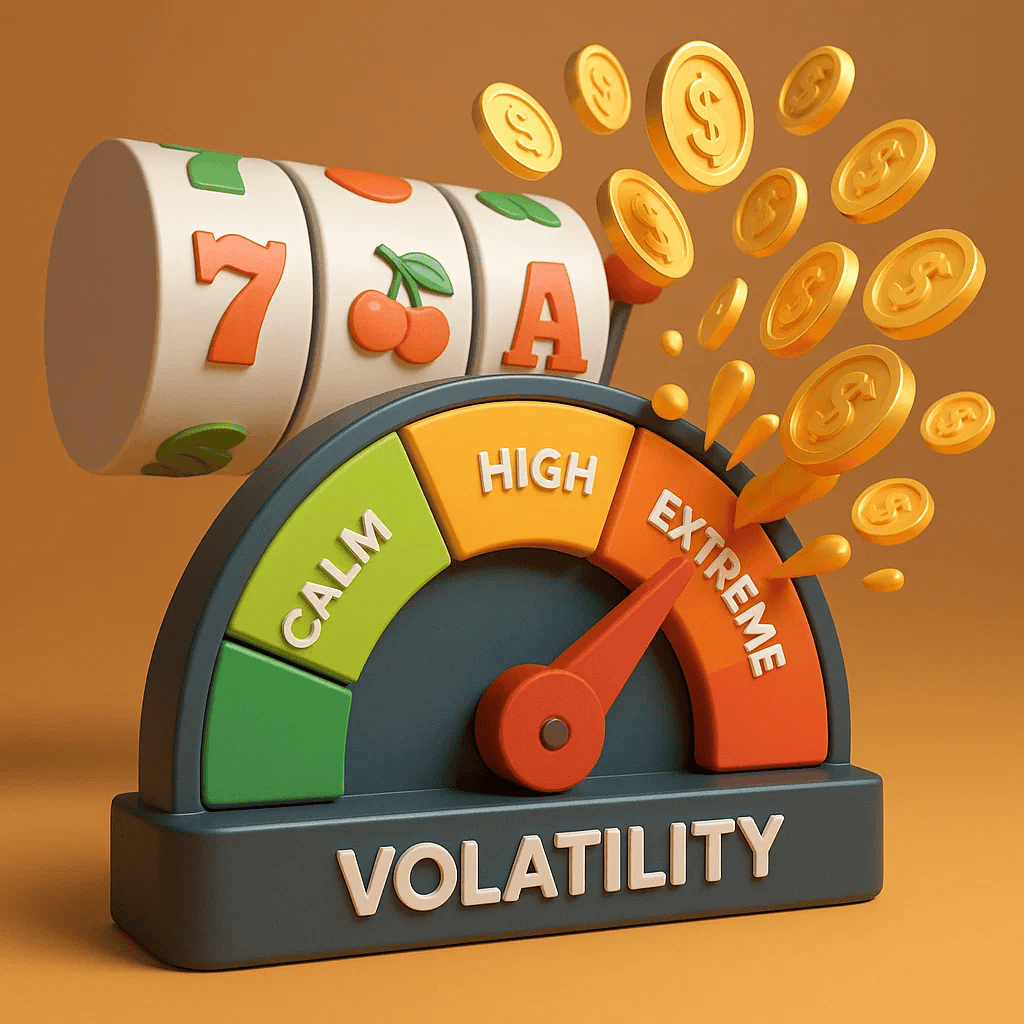
In other words, volatility doesn’t change the RTP by itself, but it dramatically changes how the math of the game feels during real play.
High, Medium, and Low Volatility Explained
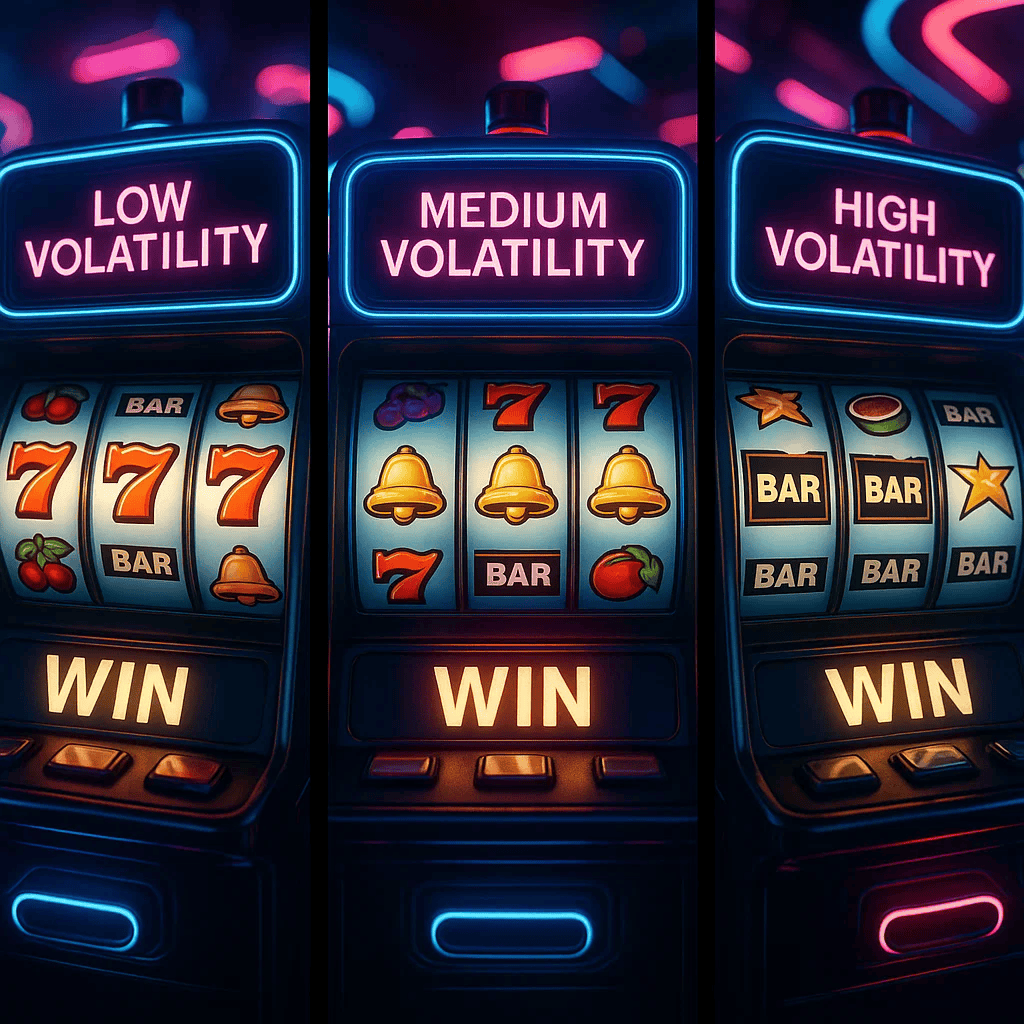
When you understand the three basic volatility bands, it becomes much easier to match a game to your budget and expectations.
- Low volatility: frequent wins, usually small. Good for long, relaxed sessions and smaller bankrolls.
- Medium volatility: a balance between hit frequency and win size, with occasional bigger payouts.
- High volatility: long dry spells are common, but individual wins can be very large compared to your bet.
After seeing a few dozen spins, you can usually feel which category a slot belongs to: fast trickles of small payouts, or rare spikes that dominate your session results.
How Volatility Is Built Into a Slot
Before listing the main design factors, remember that volatility is not random – it’s programmed by the math model behind the game.
Key elements that shape volatility include:
- Paytable structure – very large top prizes with few mid-range payouts usually mean higher volatility.
- Bonus design – if most of the potential is locked inside rare bonus rounds, volatility increases.
- Hit frequency – the underlying reel or grid model defines how often any winning combination appears.
- Jackpots and special features – progressive jackpots and high-impact mechanics naturally push volatility up.
Together, these parameters determine whether a game feels like a gentle stream of outcomes or a roller coaster.
Online vs Land-Based Volatility
Modern online slots are designed with precise algorithms that control payout distribution and volatility.
In online games:
- Developers can easily tune volatility using math models and simulations.
- It’s common to offer multiple volatility levels across a game portfolio.
- Players can quickly test volatility by using demo mode and observing win patterns.
In traditional physical machines, changing volatility can require hardware access and technical work, so adjustments are less flexible.
Who Should Choose Low-Volatility Slots?
Low-volatility slots are ideal if you:
- have a small or fixed budget,
- prefer long, steady sessions,
- dislike long streaks without wins,
- enjoy constant visual feedback and smaller hits.
These games help new or casual players stay engaged because payouts appear regularly, even if they’re modest.
Who Should Choose High-Volatility Slots?
High-volatility games suit players who:
- accept long dry streaks for a chance at big wins,
- are comfortable with big bankroll swings,
- enjoy high-pressure, high-adrenaline sessions,
- focus on the potential of a few huge hits instead of many small ones.
These slots reward patience and discipline. Experienced players typically set strict limits and avoid chasing losses, because big payouts are never guaranteed.
Practical Tips for Using Volatility Wisely
Before you spin, it helps to think about how volatility fits your goals for the session.
- Check the game info: many slots reveal volatility in the help section or marketing description.
- Test in demo mode: 30–50 free spins are usually enough to feel how often wins appear.
- Adjust bet size: use smaller bets on high-volatility games to survive longer cold streaks.
- Match volatility to mood: choose low-volatility when you want relaxed entertainment, and high volatility when you’re chasing intense, high-risk excitement.
Combining volatility awareness with clear bankroll limits keeps your play more controlled and enjoyable.
Conclusion
Volatility is one of the most important characteristics of any slot. It determines whether your session is built around small, frequent wins or rare, dramatic payouts. By understanding how volatility works, you can deliberately choose games that match your risk tolerance, budget and preferred pace – turning slot selection from guesswork into an informed decision.